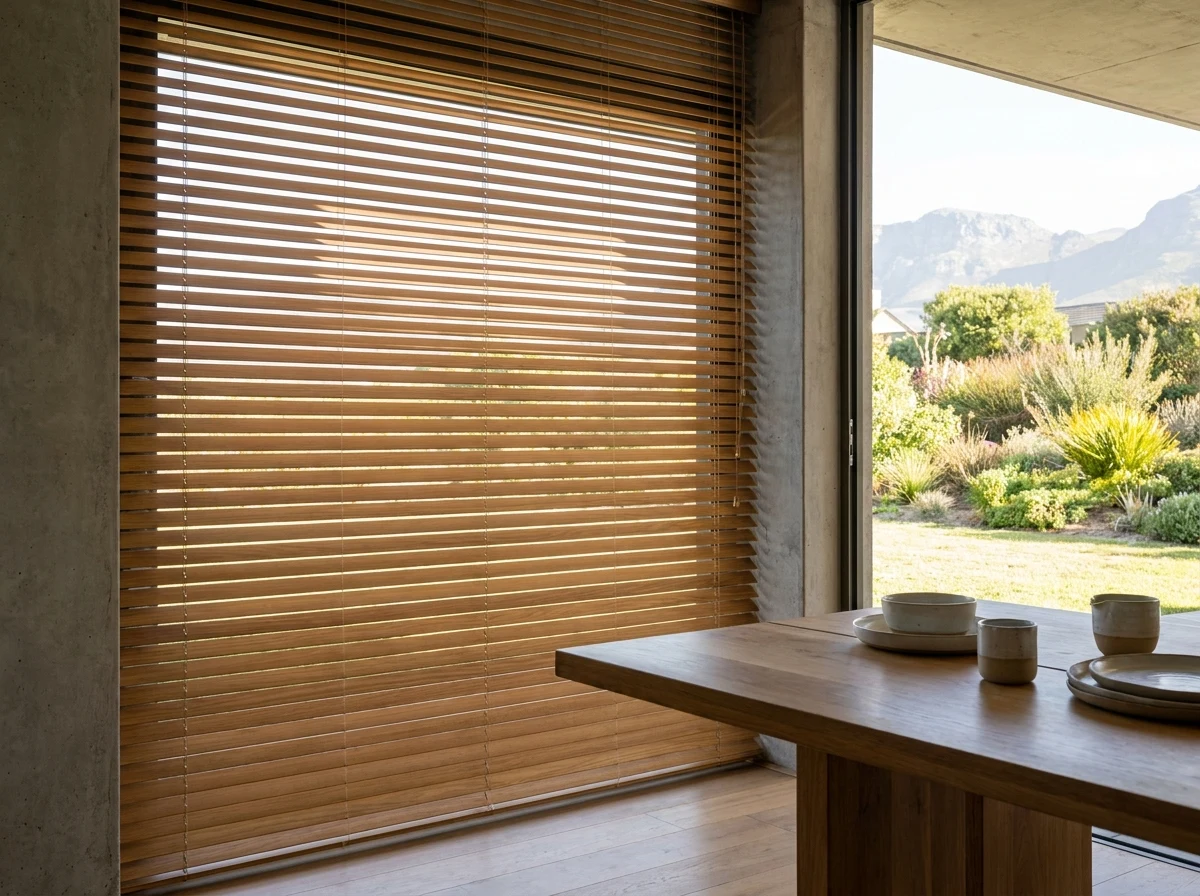
Timber venetians
50mm basswood slats that tilt to steer light. The right answer in a room with proportions worth respecting.
Explore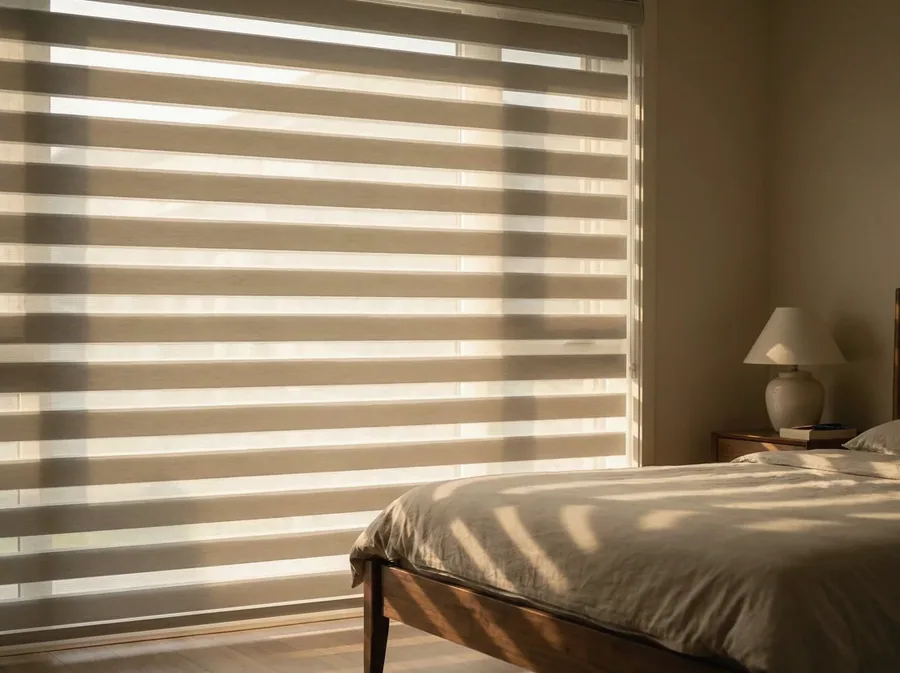
A day-night blind (you will also hear zebra or vision blind) is a single loop of fabric with alternating opaque and transparent horizontal bands. It runs over the tube as a continuous loop, so a short pull on the chain slides the front layer against the back layer. Bands aligned: you see through. Bands offset: the solid stripes close the gap.
The point is that you change the character of the window without changing its height. A conventional roller only gives you light by giving up the top of the window; a day-night gives you light and privacy at full drop.
Street-facing rooms in the older parts of Brooklyn and Hazelwood, where the window sits close to a boundary wall and you want daylight without an audience. Ridge lounges where the view is the whole point but the four-o'clock glare is not. Guest rooms and studies that have to be two things at different hours.
Because the fabric is a loop, a day-night blind needs a little more space above the window than a plain roller, and the loop makes it slightly heavier to operate by hand at wide sizes. On a four-metre stack door we would recommend either splitting it into two blinds or motorising it. We will tell you which at the measure.
Often specified alongside
50mm basswood slats that tilt to steer light. The right answer in a room with proportions worth respecting.
Explore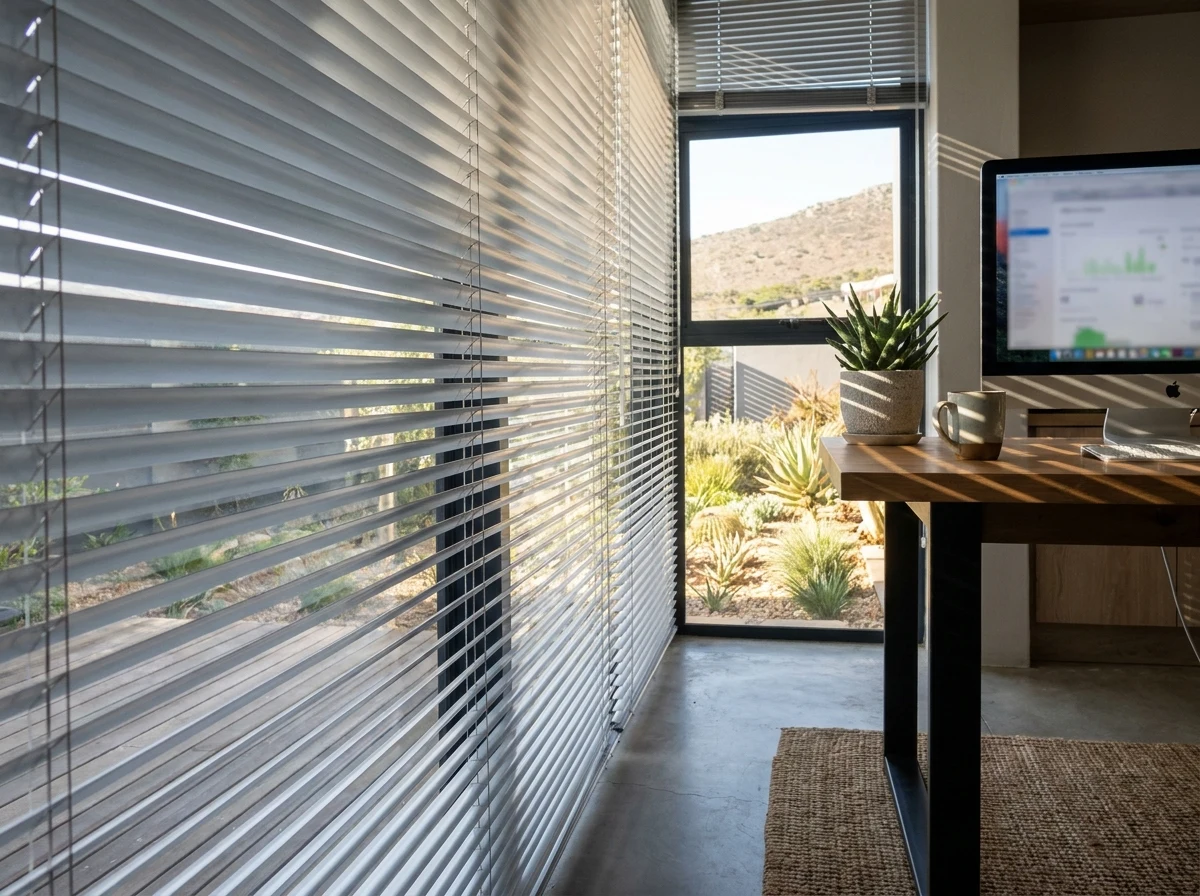
25mm or 50mm metal slats that shrug off steam and splashes. The practical venetian for kitchens and bathrooms.
Explore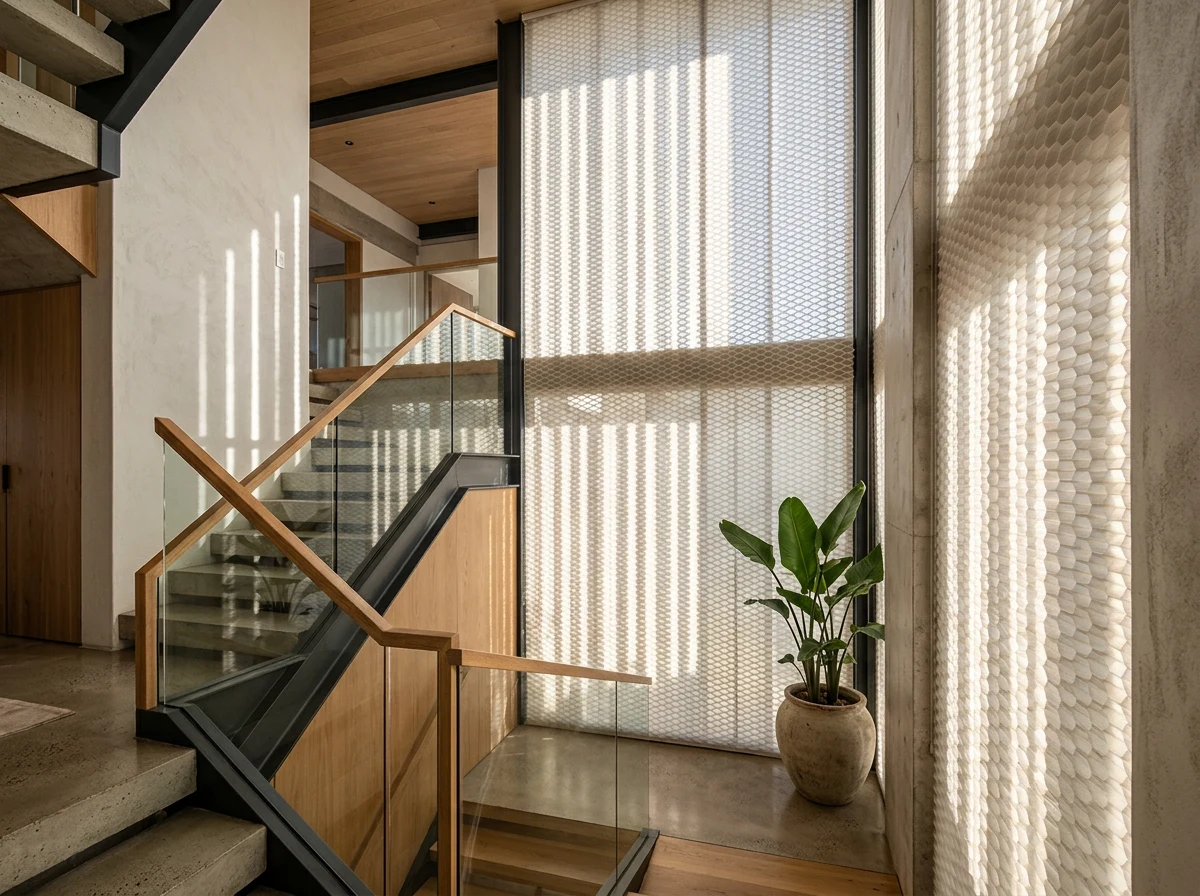
Air trapped inside a honeycomb weave. The best-insulating fabric blind we fit, and the quietest.
ExploreWhere we fit it
Day-night blinds do particularly well on the street-facing windows of Brooklyn and Hazelwood, and we fit them just as often on the Ridge, in Groenkloof and in Menlo Park.
Next step
A free in-home measure, samples in your own light, and a written quote itemised per window. One of our expert consultants will contact you shortly.