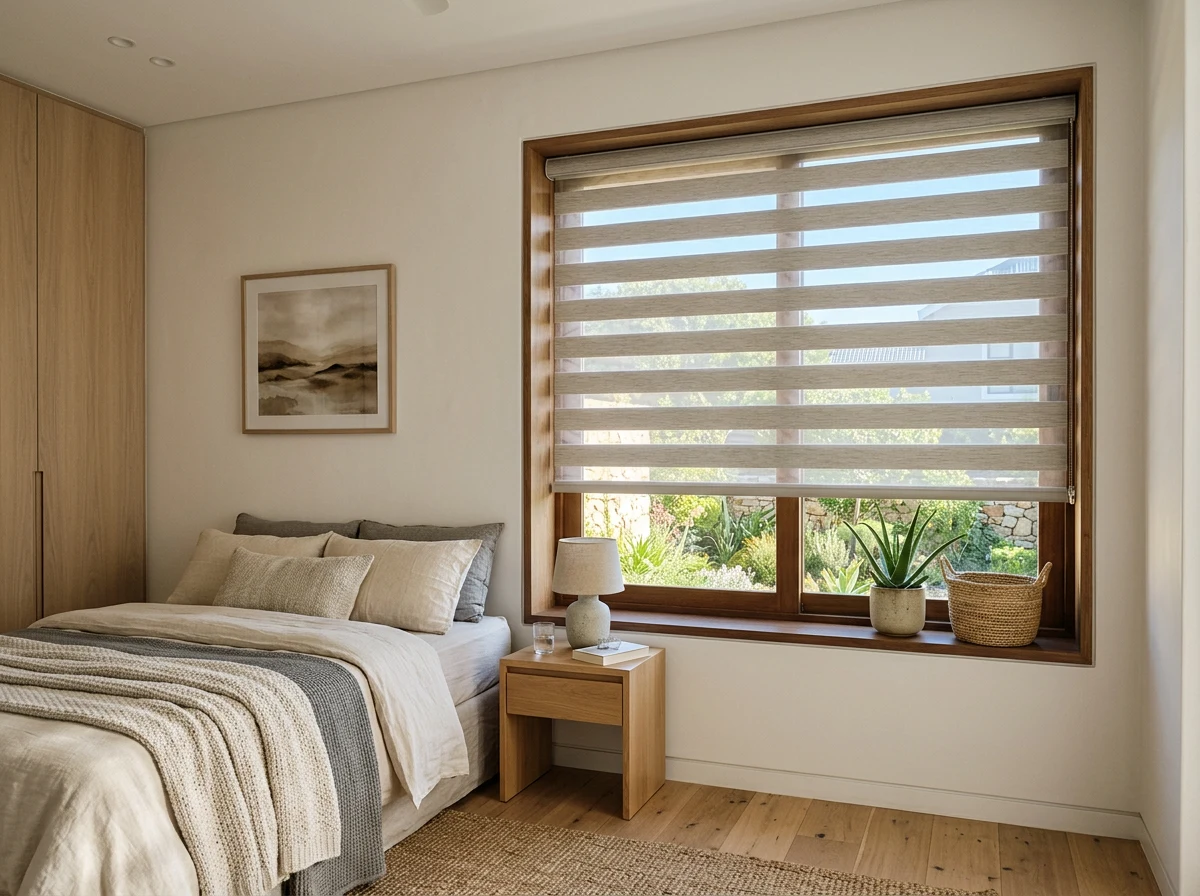
Day-night blinds
Alternating sheer and solid bands that slide past each other. View by day, privacy by night, one blind.
Explore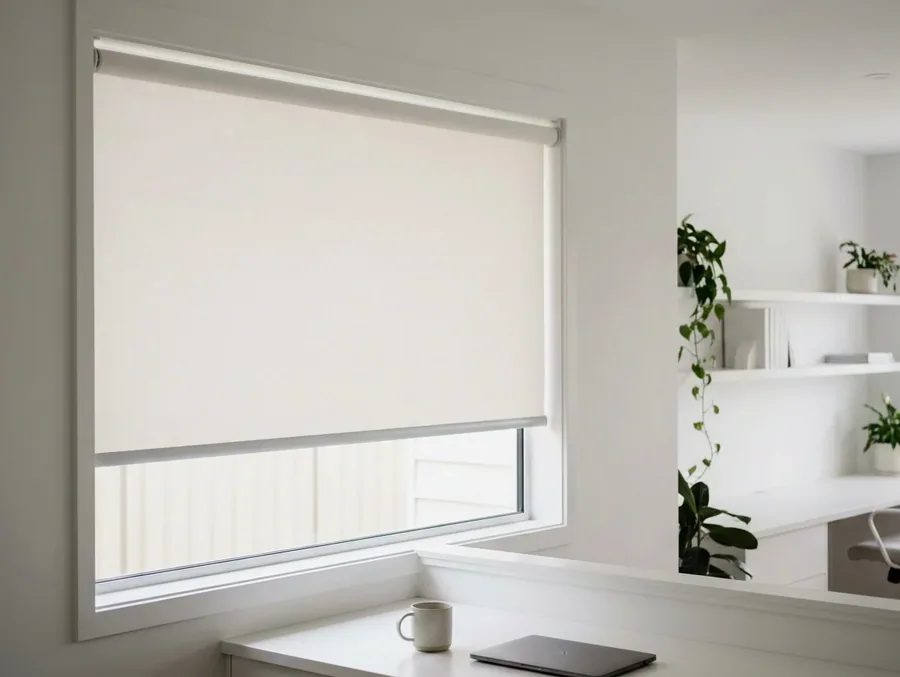
A blockout roller is a coated fabric that stops light rather than filtering it. It is what we fit in main bedrooms, nurseries and television rooms, and it is the fabric that makes the biggest difference to a Pretoria summer bedroom that faces east and gets the sun at half past five in the morning.
There is an honest limit worth knowing before you buy: a roller blind hangs a few millimetres off the glass, so a thin halo of light always finds the edges. Where you want true darkness rather than nearly-dark, we add side channels — slim aluminium tracks down each side that the fabric runs inside — and the halo disappears. It costs more. In a main bedroom it is usually worth it.
Sunscreen is an open-weave mesh, typically 3–10% openness. Lower openness means more heat and glare stopped and less you can see through; higher openness means more view and more sun. On a Waterkloof Ridge living room with the city bowl in front of it, 5% is the number that comes up again and again: the glare goes, the view stays.
The mesh is doing thermal work as well as visual work. A pale sunscreen reflects heat back out through the glass before the room absorbs it; a dark sunscreen gives you a crisper view but absorbs more of that heat itself. We show you both at the measure, in the room, at the time of day that matters to you.
Where a room needs both jobs done properly, a double roller puts a sunscreen and a blockout on the same bracket: mesh down by day, blockout down at night. If you would rather have one blind doing both, look at a day-night blind, which alternates sheer and solid bands in a single fabric.
A roller runs on a side chain, a spring mechanism or a motor. Every chain we fit is tensioned and anchored to the wall as standard — not on request. In nurseries, playrooms and any low window we will steer you towards a motorised or cordless control instead, so there is nothing hanging at all.
Often specified alongside
Alternating sheer and solid bands that slide past each other. View by day, privacy by night, one blind.
Explore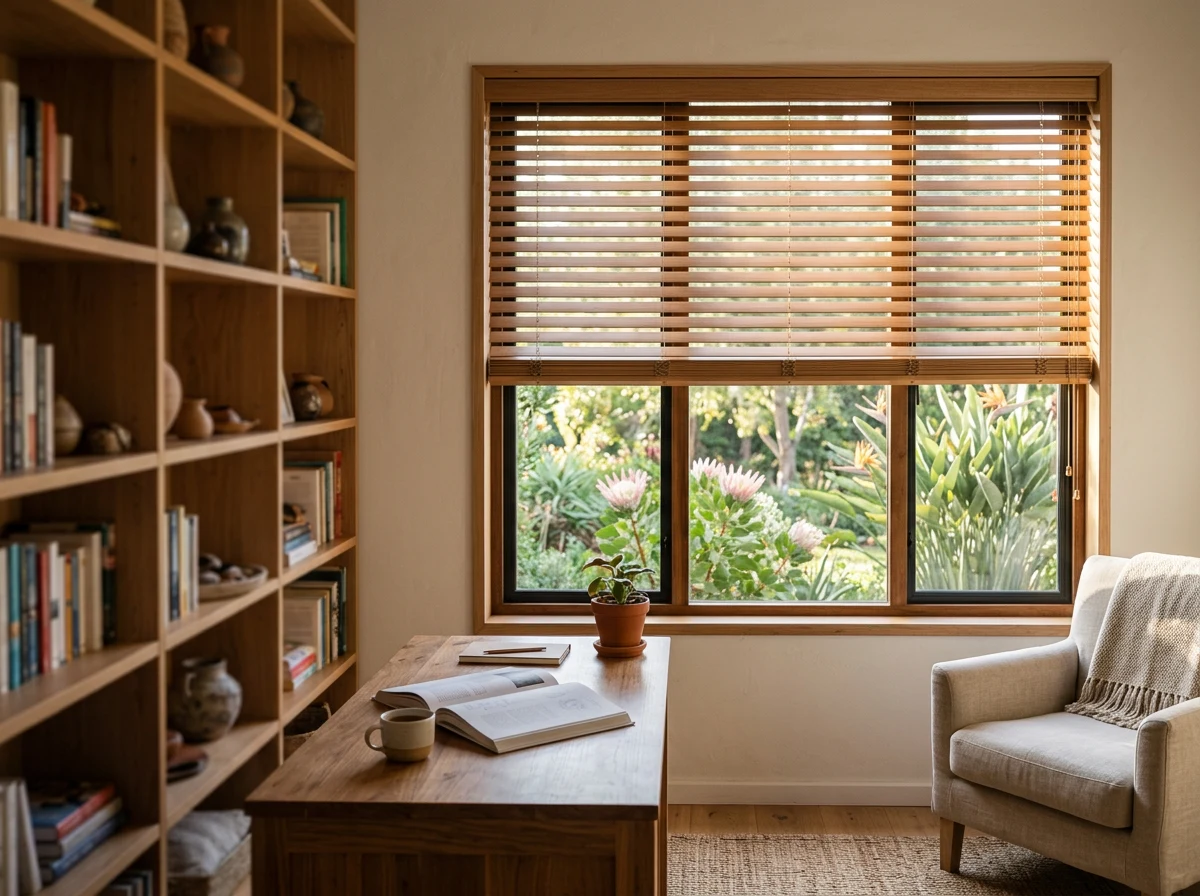
50mm basswood slats that tilt to steer light. The right answer in a room with proportions worth respecting.
Explore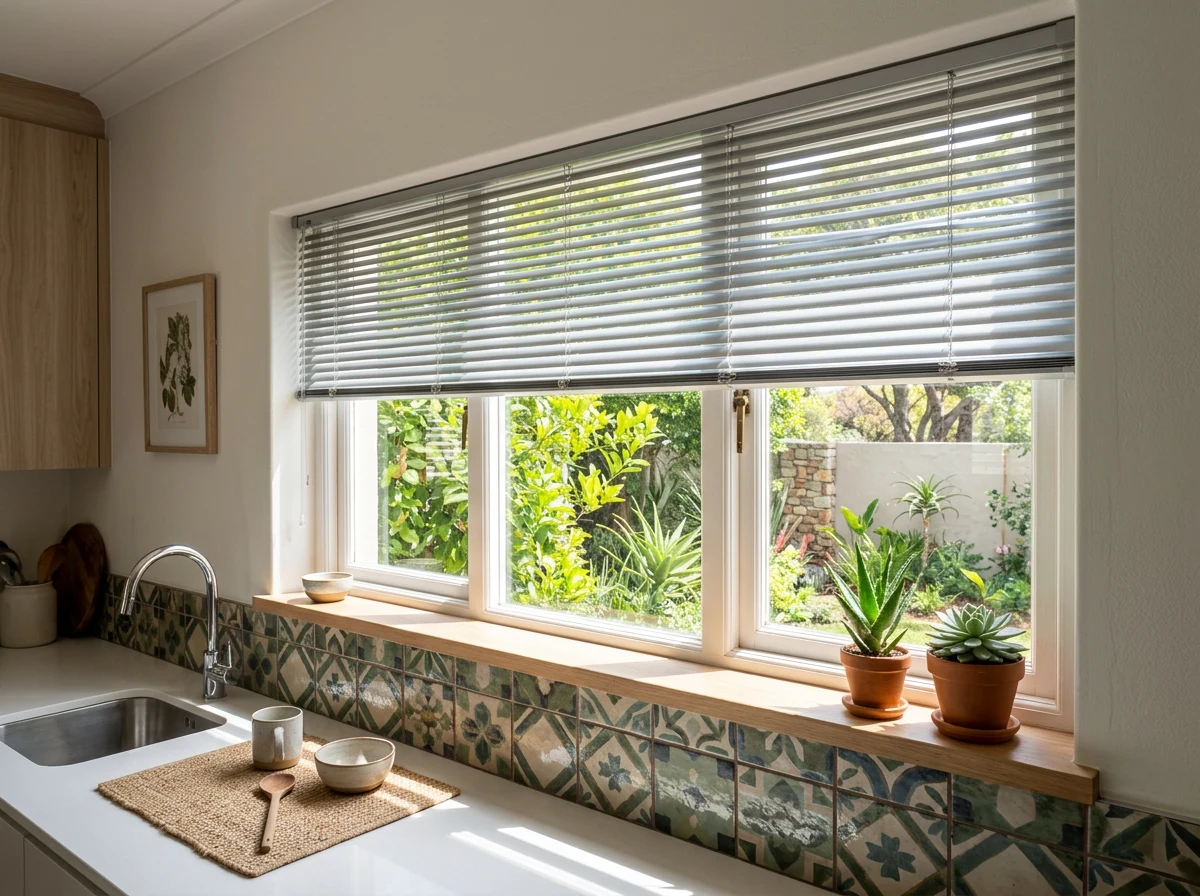
25mm or 50mm metal slats that shrug off steam and splashes. The practical venetian for kitchens and bathrooms.
ExploreWhere we fit it
Roller blinds are Groenkloof's most-requested blind and the one we fit most everywhere else too — in Waterkloof, on Waterkloof Ridge, and in Brooklyn, Menlo Park and Hazelwood.
Next step
A free in-home measure, samples in your own light, and a written quote itemised per window. One of our expert consultants will contact you shortly.